
Margaret & Michael
The "strange geometry / Within the heart of" a prolific children's author and a mercurial, avant-garde poet.

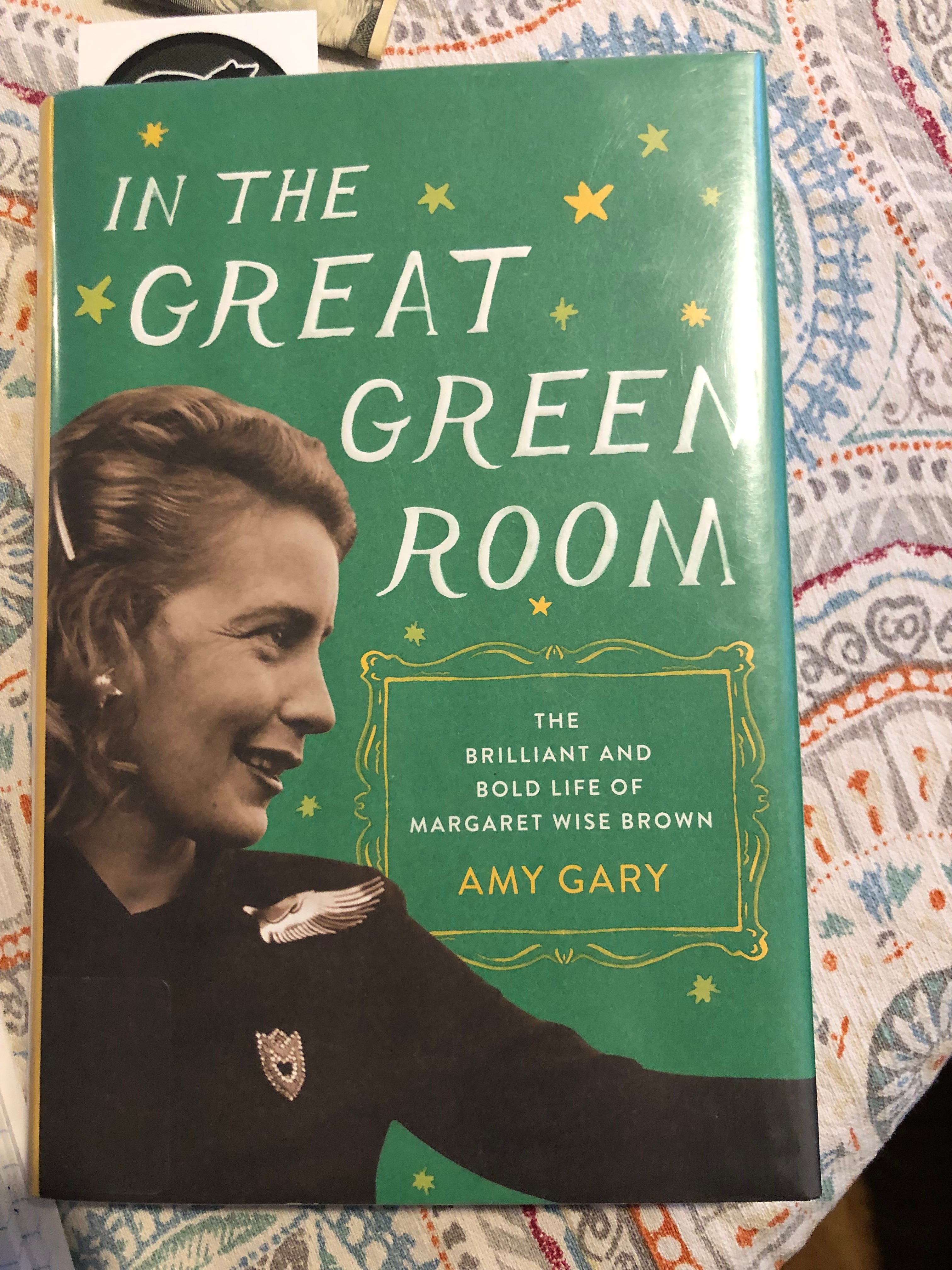
In the Great Green Room: The Brilliant and Bold Life of Margaret Wise Brown, Amy Gary tells many compelling stories about the beloved children’s author, her prolific output, and her dramatic love life.
Margaret Wise Brown is most famous for Goodnight Moon, and everyone loves The Big Red Barn. As a mother reading to little ones, I much preferred the very weird, kind of dark, and endlessly interesting The Little Island, and – because it’s less weird and more cozy and straightforward – The Friendly Book.


In this biography, I learned about her relationship with Michael Strange. Michael was an actress, playwright, and poet, from money and married to more money. (Her second marriage was to a famous actor, Drew Barrymore’s grandfather.) The book does not give any insight into how she came to choose the name Michael for her daily life, but Wikipedia says it began as a pen name.
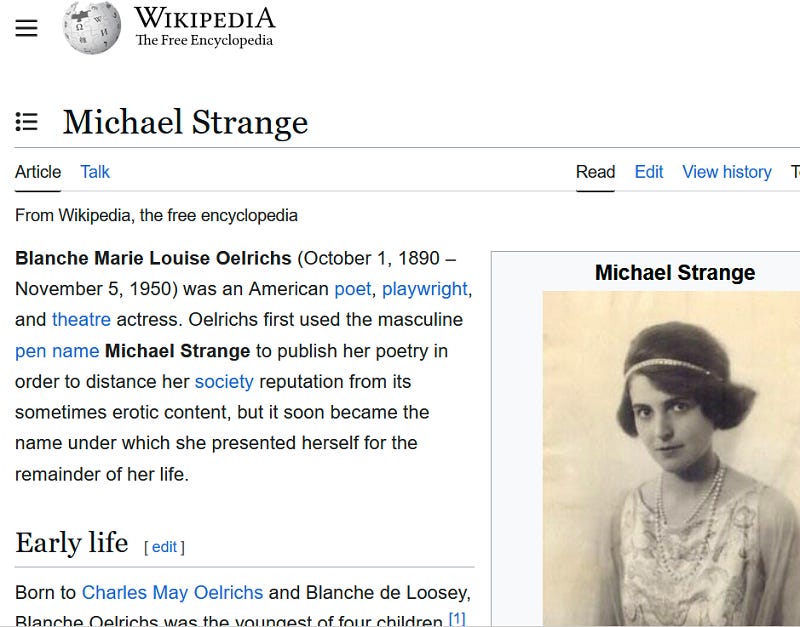
Mercurial Michael
“Always mercurial, Michael” begins to turn “even more sensitive and irritable.”
Margaret puts up with Michael raging at her, calling her insensitive, dealing with the moods, getting criticized for how she talks, for being superficial.
Then, instead of realizing she doesn’t have to spend her incredible mind on this energy drain, she deeply reflects on the accusations and agrees with them! She believes Michael was not being cruel but loving! And (!):
“If she was to keep Michael’s love, she had to come forth as herself, pure and relaxed, uncompromised and ruthless. She apologized to Michael.”
Read for yourself (p. 142-144) how baffling Margaret’s reactions and choices are…
An Exposé During a Messy Divorce
Michael’s husband initiated a divorce and in the process of this messy divorce, he spoke to a major New York newspaper.
The newspaper then published an exposé of Michael’s relationship with Margaret and branded Michael as “Sappho of Long Island.” (Since Sappho is considered a great poet, it’s ironic that this paper also dismissed “Michael’s stage career and poetry as insignificant.”)
This exposé was a breaking point in their relationship:
“Being an avant-garde, somewhat androgynous poet was considered eccentric and was tolerated in her circle of society friends like the Vanderbilts and Astors, but being called a lesbian in the paper of record almost certainly meant social banishment.”
Apparently, Michael wasn’t willing to risk her social standing or her “androgynous, mysterious allure” for Margaret, so, although they “both longed for something beyond love and friendship,” they stayed apart while Michael sorted out her divorce and found a new place to live, and figured out if her reputation would survive.
I won’t ruin the Margaret and Michael story for you. To find out how this ends, read the book!
A Moment of Historical Perspective
Michael pushes Margaret away to try to protect her reputation and social standing. It’s funny to think then, in the 1940s, no one – and certainly not Michael – imagined Margaret Wise Brown’s name would outlast Michael Strange’s, that Michael’s life would be a chapter in a biography about the author of Goodnight Moon.
Michael also feels safer presenting as androgynous than lesbian. In today’s culture, being or presenting as androgynous isn’t strikingly more or less shocking or socially acceptable than being a lesbian or any number of other gender or sexual preferences and presentations. Likely, they couldn’t foresee that either.
I’m Baffled By Her Choices in Love
Margaret made this choice with more than one romantic partner: She kept choosing people who wouldn’t put her first, not through monogamy or financial or emotional support.
With Margaret’s penchant for troublesome loves, for selfish, non-monogamous, distant, passionate, volatile people, I have to wonder why. Why when she was beautiful and rich and brilliant and energetic and productive and connected and fun!
She should have had people worshiping the ground she walked on, dedicated for life. She should have chosen a partner who would protect and support this unique and precious mind. She should have found someone who would at least try to be loyal and supportive.
I’m speculating here, but it’s as if all her romantic partners had to offer was fun (and maybe close to equal intellectual footing). I imagine for Margaret that was a small pool to choose from. And it’s possible that she was willing to compromise for what she wanted because clearly she really needed fun. Throughout her life, she seemed to find it or create it wherever she went.
Love and Writing
In the end though, Margaret chose love – she gave and forgave and shared what she had and expressed love and kept writing, even with the pauses that at the time may have loomed large. It may be that her way of loving and writing were one, as she was unified within herself.
Look at this poem Margaret wrote (which Amy Gary included in full in the biography). I don’t know it’s about Michael. But I do wonder how would it be taken today.
   Put a he on a he
   Or a she on a she
   And it never adds up to 1 2 3.
   Put a he on a she
   Or a she on a he
   And before you can even say Jack Robinson
   You’ve made 3.
   He times she divided by he
   Then take away she
   And now what have you left?
   A he or a she.
   And what’s this strange geometry
   Within the heart of you and me?
   This place apart
   This secret heart
   When all is what it seems to be.

      “He and She” published in White Fresias by Margaret Wise Brown
There are many interesting chapters in Margaret’s life and this is just one of them. Read this book!